


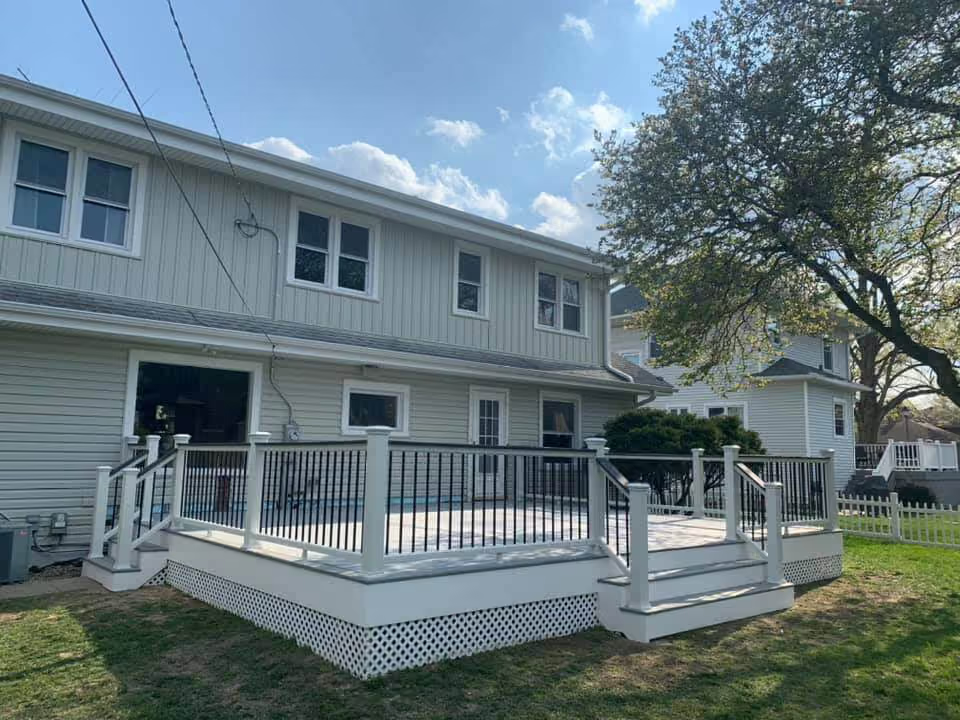
Composite vs Wood Deck in Chicago: What Holds Up Best
Chicago-area decks go through a lot. They bake in humid July heat, soak through wet springs, and freeze and thaw dozens of times each winter under snow and shovels. If you're comparing composite vs wood for a new deck in Roselle, Schaumburg, Elmhurst or the surrounding suburbs, the material matters more here than in milder climates.
This guide compares composite decking vs wood against real Chicago conditions, covering durability, upkeep and cost, so you can pick the option that fits your home and budget.
Composite vs. Wood Deck: The Short Answer
For most Chicago homeowners, capped composite decking holds up best. It resists moisture, rot and splintering with far less upkeep, and manufacturers back it with warranties of 25 years or more. A wood deck, whether pressure-treated or cedar, still makes sense on a tighter budget or if you love real wood and don't mind regular maintenance.
Neither material is perfect. Composite gets hot in direct sun, and any deck fails early if it's poorly built. Here is how each one behaves through a Chicago year.
What Chicago Weather Does to a Deck
Four conditions do most of the damage:
- Freeze-thaw cycles. Water gets into small cracks, freezes, expands and widens them. Repeat that all winter and wood checks, splits and loosens.
- Heavy snow and ice. Snow adds weight and traps moisture against the surface. Shovels and ice melt add wear.
- Spring and summer humidity. Persistent moisture encourages mold, mildew and rot, especially on shaded decks.
- Summer sun. UV breaks down wood finishes and fades some decking surfaces. Direct sun can also make dark boards uncomfortably hot.
How a Wood Deck Handles Chicago Weather
Pressure-treated pine is the budget choice. The treatment resists rot and insects, but the boards still absorb and release moisture, so they tend to cup, warp, crack and splinter over the seasons.
Cedar is more stable and naturally rot-resistant. It looks great, but it silvers and weathers unless you stain it regularly.
Tropical hardwoods like ipe are extremely durable and expensive. Angi lists ipe at roughly $9 to $17 per square foot for decking, and it takes specialized installation.
Wood's Chicago drawbacks
- Needs cleaning, sanding and re-staining or sealing every one to two years
- More splinters, cracks and loose boards after hard winters
- Typical lifespan of about 10 to 20 years depending on species and care
Wood's advantages
- Lower upfront cost
- Authentic look, feel and smell
- Easier to modify and repair, and it can be refinished to restore its look
How a Composite Deck Handles Chicago Weather
Composite decking combines wood fibers and plastic. Modern capped composites add a protective polymer shell that resists stains, moisture and fading. PVC decking is fully synthetic and even more water-resistant, and it tends to cool down faster after direct sun.
Composite's Chicago advantages
- Freeze-thaw: Boards don't absorb moisture like wood, so they resist the cracking and splitting that freeze-thaw causes.
- Rot and insects: Composite doesn't rot and resists termites and other wood-destroying pests.
- Splinters: The surface stays smooth underfoot through temperature swings.
- Upkeep: No staining or sealing, just sweeping and washing. Leading brands offer warranties of 25 to 50 years.
Composite's honest drawbacks
- Heat: Dark boards in full sun can get hot. Lighter colors and shade help, and some lines are engineered to stay cooler.
- Slippery when wet: Some composite surfaces are slick in rain or frost, so choose a textured, slip-resistant board.
- Expansion and contraction: Composite moves with temperature, so correct board gapping matters in a climate with big seasonal swings.
- Can't be refinished: If a board is damaged it is replaced, not sanded and re-stained.
- Shoveling: Use a plastic shovel and only de-icers approved by your manufacturer.
- Upfront cost: Higher than pressure-treated wood.
Composite Decking vs. Wood: Side-by-Side Comparison
Composite Deck vs. Wood Deck Cost Over 20 Years
Upfront price is only part of the story. Angi puts the Chicago average for a new deck at about $7,135, with most projects between roughly $4,100 and $10,200. Pressure-treated wood sits toward the low end of that range, while composite and hardwood sit higher.
Bob Vila reports that composite decking costs more upfront than wood, with high-quality composite averaging about $15 to $36 per square foot. Actual prices vary by brand, product line and project size, so use a written local quote rather than a national average.
Deck composite vs wood cost: where the money goes
A wood deck needs cleaning, stain or sealer every year or two, plus occasional board repairs, and it may need replacing in 10 to 15 years. A composite deck costs more on day one but avoids most of that ongoing spend. Manufacturers such as Trex publish long-term cost comparisons that favor composite. Treat those as brand-supplied figures, but the direction matches independent guides: composite usually costs less over the long run if you plan to stay in your home for 10+ years.
If you plan to sell within a few years, a well-built wood deck can still be the smarter financial choice.
Installation Details That Matter More Than the Material
Even the best decking fails if the structure underneath is wrong. On Chicago-area projects we pay close attention to:
- Footings below the frost line. Frost heave can shift shallow footings and twist a deck. Local code sets the required depth.
- Proper board gapping. Composite needs room to expand, and wood needs spacing for drainage.
- Ventilation and drainage. Airflow underneath helps decks dry out and run cooler.
- Corrosion-resistant fasteners and flashing where the deck meets the house, to keep water out of the ledger board.
- Framing support. Composite is heavier and can need closer joist spacing, so the frame must match the board manufacturer's requirements.
- Permits. Most decks in Roselle, Schaumburg and nearby suburbs need a permit and inspection. A licensed contractor handles that for you.
Wood vs. Composite Decking: Which Should You Choose?
Choose composite if you:
- Want low maintenance and plan to stay 10+ years
- Have a shaded or moisture-prone yard
- Have kids, pets or barefoot summers in mind
- Prefer a deck that looks the same year after year
Choose wood if you:
- Have a tight upfront budget
- Love real wood and don't mind annual upkeep
- Are building a smaller or shorter-term deck
Consider PVC or a lighter composite color if your deck gets all-day southern exposure.
When you weigh wood vs composite deck options, think about how long you'll own the home, how much upkeep you'll realistically do, and how much sun the deck gets.
Plan Your Deck With CHR Contractors
CHR Contractors is a family-owned, licensed and insured builder serving Roselle, Schaumburg, Elmhurst and the surrounding Chicago suburbs. We build both composite and wood decks, and we'll give you an honest recommendation based on your yard, budget and timeline.


